 Merken
 My first merguez came from a street vendor in Tunis on a sweltering afternoon, wrapped in paper so grease-spotted it fell apart in my hands. I bit into it without thinking and nearly coughed from the heat, the harissa and cayenne hitting my palate all at once, followed by something almost herbal—the fennel and caraway working like a whisper beneath the bold spices. That moment, standing in the medina with juice running down my wrist, I knew I had to learn how to make this.
I made merguez for a dinner party on a Tuesday night when everything felt chaotic, and somehow these little spiced sausages became the moment everyone relaxed. Someone poured wine, someone else brought out warm flatbread, and suddenly we weren't rushing through courses—we were just sitting around a grill, watching the casings blister and char, laughing at how the smoke kept chasing us around the table.
Ingredients
- Ground beef and lamb (500 g total): The combination gives you depth that either meat alone can't achieve; the lamb's richness mellows the beef's leanness, creating a tender sausage that stays juicy even if you slightly overcook it.
- Harissa paste (2 tbsp): This is the soul of merguez—use good quality, preferably North African if you can find it, because the difference between average and exceptional harissa is the difference between a sausage and a memory.
- Cumin, coriander, fennel, and caraway (1 tbsp each of first two, 1 tsp each of the others): These warm spices create that almost mysterious depth that makes people ask what's in here; don't skip any of them.
- Smoked paprika and cayenne (1 tsp each): Smoked paprika adds color and a subtle wood-fire taste; cayenne is where the heat lives, so taste as you go and adjust before stuffing.
- Fresh cilantro and parsley (2 tbsp each): These brighten everything at the last moment, cutting through the richness so the sausage doesn't feel heavy.
- Sheep sausage casings (1.5 m, soaked): They should feel supple and a bit slippery in your hands; if they've been sitting dry, soak them longer and handle them gently or they'll tear.
- Cold water (2 tbsp): This acts as a binder and keeps everything from feeling dense; the mixture should come together like wet sand, sticky but not sloppy.
Tired of Takeout? 🥡
Get 10 meals you can make faster than delivery arrives. Seriously.
One email. No spam. Unsubscribe anytime.
Instructions
- Combine your meats and begin seasoning:
- Mix the ground beef and lamb in a large bowl, breaking up any clumps as you go. Add the minced garlic, harissa paste, and all your dry spices—cumin, coriander, paprika, fennel, caraway, cayenne, salt, and pepper. Use your hands to work everything together until the color is even and the spices are distributed throughout; you should smell North Africa rising from the bowl.
- Fold in the fresh herbs and bind:
- Stir in the cilantro and parsley, then add the cold water a little at a time while mixing until the whole thing becomes cohesive and sticky. The mixture should cling together when you squeeze it, not fall apart into dry crumbs.
- Stuff the casings (or shape into logs):
- If using casings, fit them onto a sausage stuffer or piping bag with a wide nozzle and fill slowly, being careful not to trap air pockets. Twist into links about 5–6 inches long, or if you're forgoing casings, shape the mixture into sausage logs and refrigerate for 30 minutes so they hold their form on the grill.
- Get your grill ready and cook:
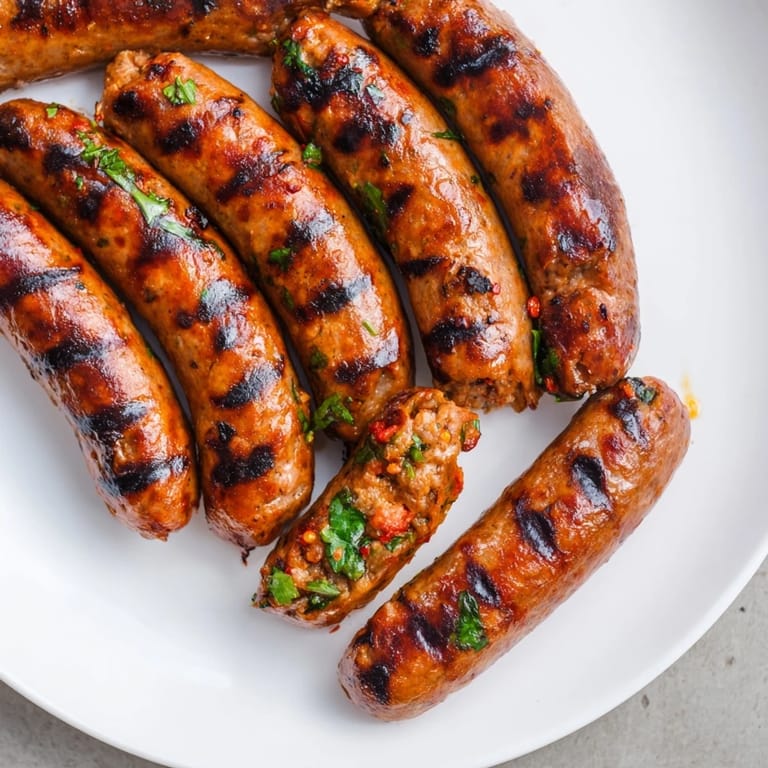
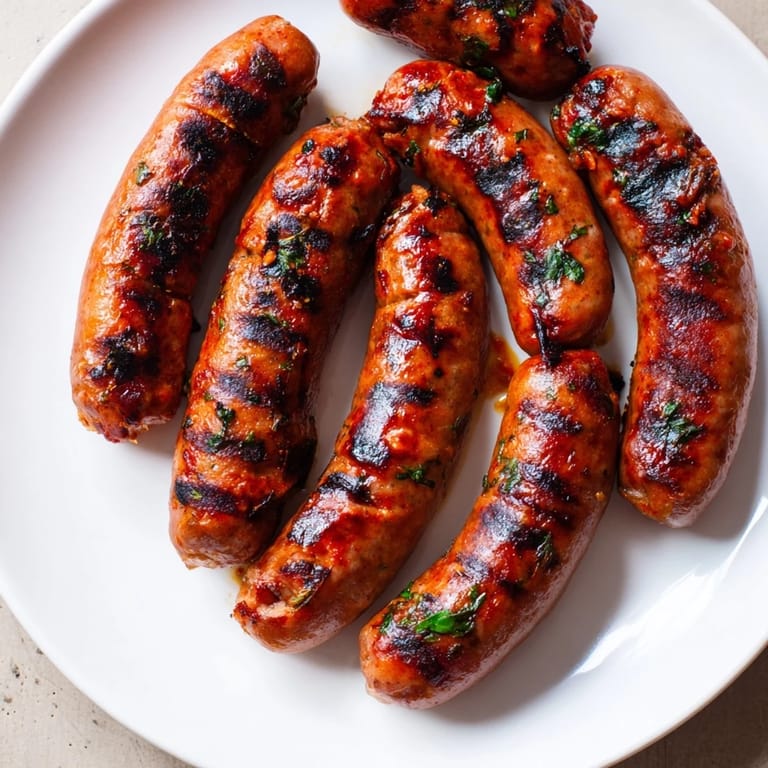
- Heat a grill or grill pan over medium-high heat until it's hot enough that a drop of water sizzles immediately. Lay the sausages on the grill (they'll stick at first, which is fine) and let them develop a brown crust before turning, about 3–4 minutes per side. They're done when the casings are blistered and the meat inside is cooked through, about 8–10 minutes total.
- Rest and serve:
- Let them sit for a minute or two if you can wait—this helps them firm up a bit. Serve immediately, still warm enough that they're juicy.
 Merken
 The best merguez moment I've had wasn't at a dinner party at all—it was morning after, sliced cold and tucked into a sandwich with soft bread and harissa mayo, the spices somehow deeper and more forgiving than they were fresh off the grill. It reminded me that food doesn't have to perform in the moment; sometimes its real magic shows up quietly, unexpectedly, the next day.
The Spice Balance That Changes Everything
What separates merguez from generic spiced sausage is the way these particular spices talk to each other. Fennel and caraway bring something almost licorice-like and slightly cooling, while cumin and coriander add warmth and earthiness. The harissa and cayenne provide heat, but they're not the whole story—they're the loudest voice in a conversation. If you use only paprika and cayenne without the fennel and caraway, you lose the complexity that makes people say this tastes like something from somewhere else. Start with the recipe as written, cook one batch, and then trust what you taste when you adjust.
Casings Versus No Casings (The Real Difference)
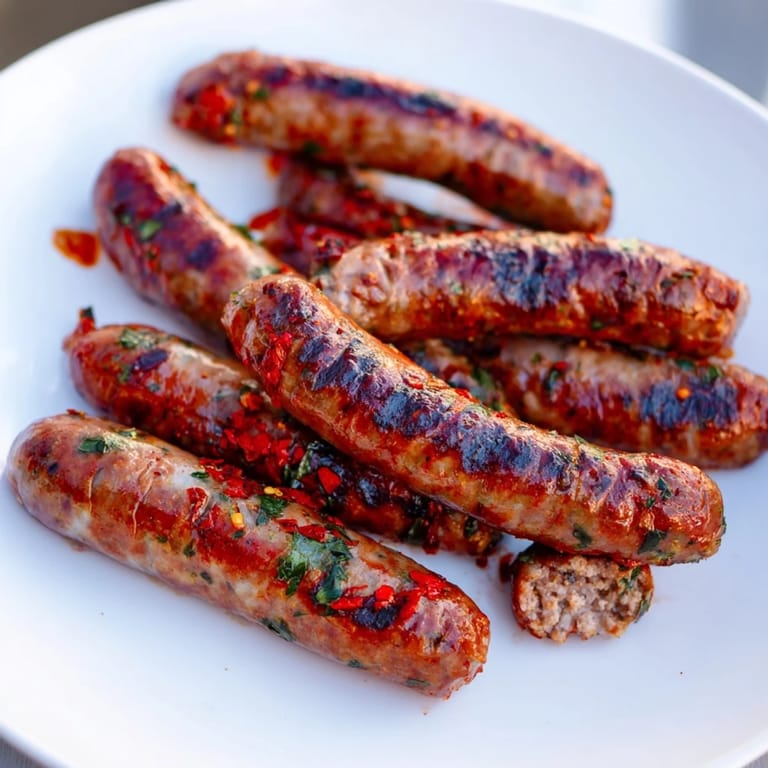
Sheep casings give you that satisfying snap when you bite down, and they allow the sausage to brown on the outside while staying juicy inside—they're worth seeking out at a good butcher counter or online, and they're inexpensive. That said, merguez without casings (shaped into patties or logs) is what you'll find in many Tunisian homes, especially in summer when kefta-style ground meat sausages are standard. The texture is different—less snappy, more tender—but the flavor is identical. Both versions freeze well for a month, so make what makes sense for your kitchen.
How to Serve It (And When)
Merguez is wonderfully flexible—it's never just one thing. Hot from the grill, it's dramatic and demands attention; sliced into couscous the next day, it becomes comfort food. Wrap it in warm flatbread with a dollop of harissa mayo or plain yogurt (the coolness balances the heat), or serve it as part of a mezze platter with olives, cheese, and bread. I've also crumbled cooled merguez into grain bowls, stirred it into soups, and tucked it into sandwiches with mustard and pickled vegetables.
- A bold red wine like Syrah or a peppery Côtes du Rhône pairs beautifully with the spice.
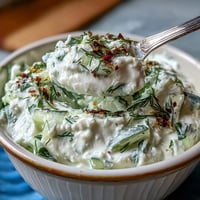
- Serve with a simple minty yogurt sauce—it cuts the richness and cools the heat in the best way.
- If you're making these for guests, always prepare one mild version and one with full heat so everyone can choose their own adventure.
 Merken
 These sausages are humble enough for a weeknight grill and exciting enough for company, which is the mark of something worth learning to make. Once you've made them once, they become part of your kitchen vocabulary—the thing you reach for when you want to feel like you're cooking with intention.
Antworten auf Rezeptfragen
- → Welche Gewürze sind typisch für Merguez?
Harissa, Kreuzkümmel, Koriander, geräucherter Paprika, Fenchel und Cayennepfeffer sorgen für das charakteristische Aroma.
- → Kann man die Würstchen ohne Därme zubereiten?
Ja, die Masse lässt sich zu Würstchen formen und ohne Hüllen gegrillt werden, ähnlich wie Kefta.
- → Wie lange sollten Merguez gegrillt werden?
Die Würstchen werden etwa 8 bis 10 Minuten bei mittlerer bis hoher Hitze gegart, dabei gelegentlich wenden.
- → Welche Beilagen passen gut zu Merguez?
Couscous, Fladenbrot, frische Salate oder ein Minzjoghurt ergänzen die würzige Wurst ideal.
- → Wie lässt sich die Schärfe anpassen?
Die Schärfe kann durch die Menge des Cayennepfeffers und Harissa nach Geschmack reguliert werden.
- → Ist Merguez glutenfrei und laktosefrei?
Ja, die Grundzutaten sind gluten- und laktosefrei, prüfen Sie jedoch Gewürzmischungen und Därme.