 Merken
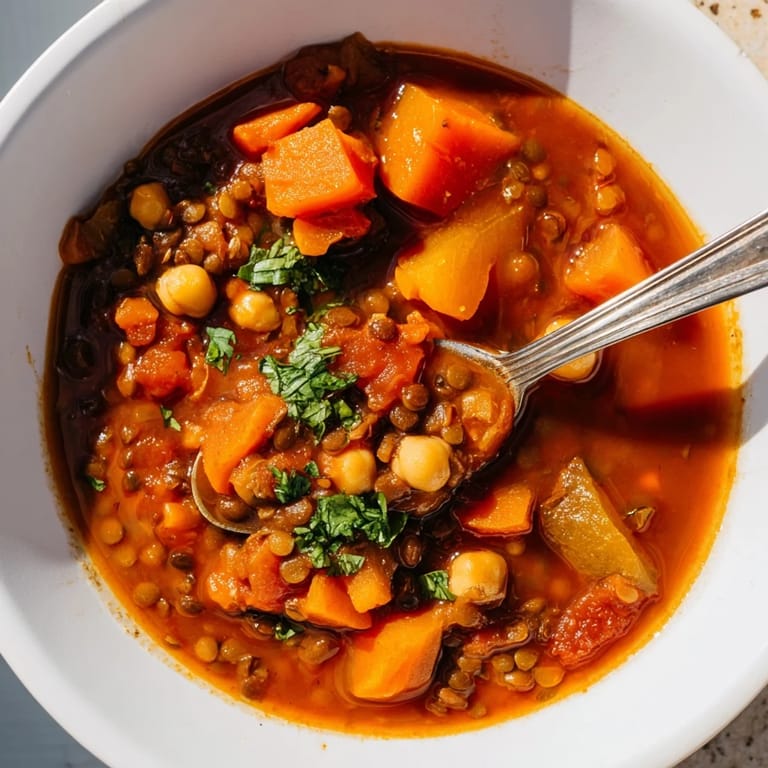
 Harira arrived in my kitchen on a gray November afternoon when my Moroccan neighbor invited me over to watch her make it. The steam rising from her pot seemed to carry stories—cinnamon and cumin mingling with tomato and something sweet I couldn't quite name. She let me taste it before the lentils were fully soft, laughing at my impatient spoon, and I understood then why this soup is stirred into so many important moments across North Africa. Now when I make it, that kitchen still feels present somehow.
I made this for my book club on a freezing February night, and people kept going back for seconds, then thirds. One friend asked if it was traditional, and I realized in that moment that food doesn't need a fancy backstory to matter—it just needs to warm someone up and taste honest. That's what harira does.
Ingredients
- Dried chickpeas or canned: Soaked overnight chickpeas have a better texture, but honestly, canned saves time and works beautifully—no shame in that choice.
- Dried lentils: They hold their shape as the soup simmers, creating a satisfying bite that won't turn to mush.
- Olive oil: Use good oil here since it's one of the first flavors that hits your spoon.
- Onion, celery, and carrots: The holy trinity that builds the foundation—dice them small enough that they nearly disappear into the broth.
- Garlic: Mince it fine so it dissolves into the soup rather than clinging to your teeth.
- Canned tomatoes: They bring acidity that balances the sweetness of the apricots beautifully.
- Tomato paste: A spoonful of intensity that deepens everything.
- Ground cumin, cinnamon, ginger, turmeric, and paprika: This spice blend is the soul of harira—the cinnamon is what makes people pause mid-bite and ask what you did.
- Cayenne pepper: Optional, but a pinch adds a gentle heat that lingers pleasantly.
- Vegetable broth: Use something flavorful enough that you'd drink it on its own.
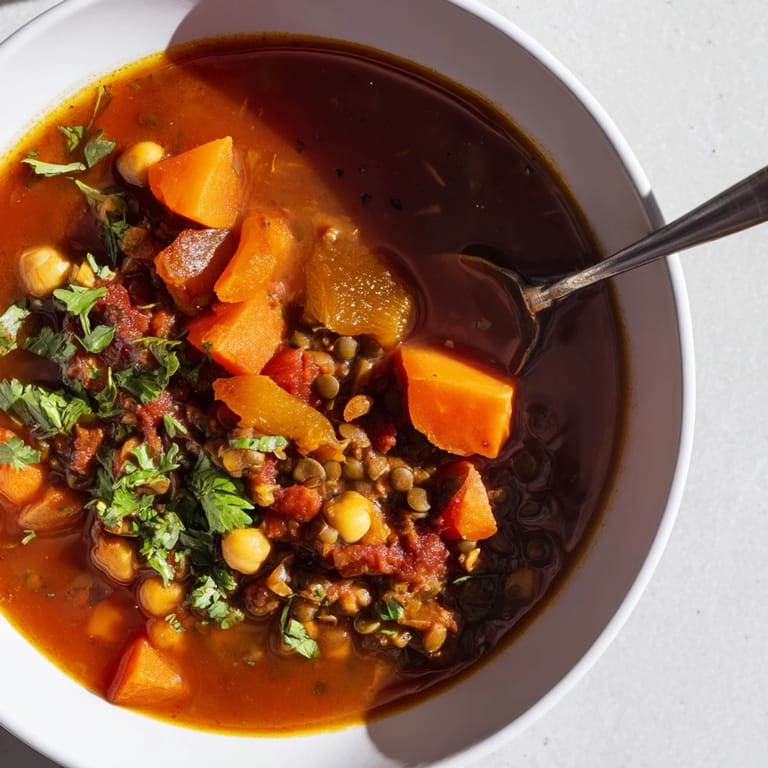
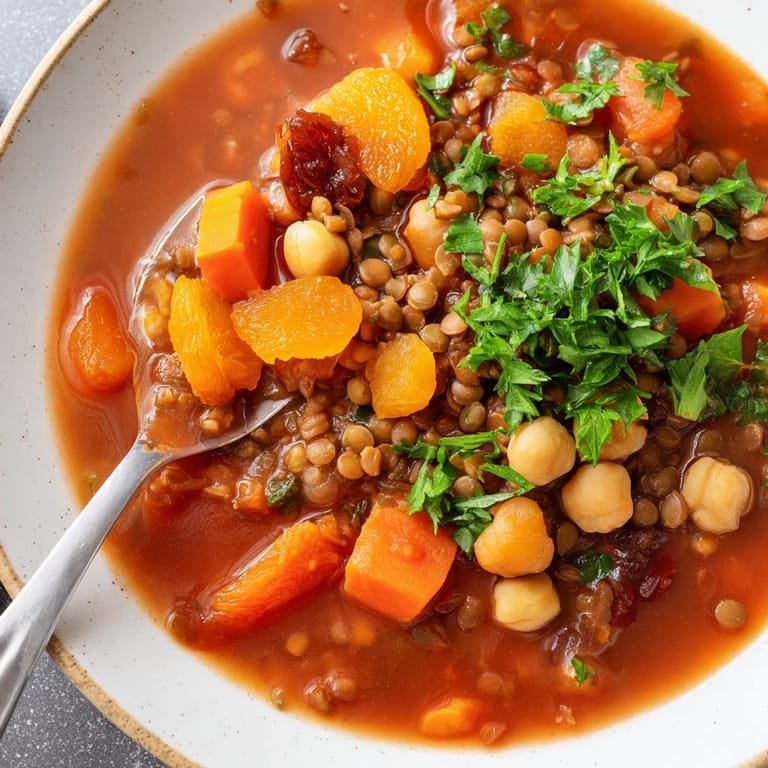
- Dried apricots: They soften and almost dissolve, releasing a subtle sweetness that rounds out the savory spices.
- Fresh cilantro and parsley: Added at the end to wake everything up with brightness and freshness.
- Lemon juice: This is non-negotiable—it pulls all the flavors into focus just before serving.
Tired of Takeout? 🥡
Get 10 meals you can make faster than delivery arrives. Seriously.
One email. No spam. Unsubscribe anytime.
Instructions
- Build Your Base:
- Heat olive oil over medium heat and add your chopped onion, celery, and carrots. Let them soften for 6 to 8 minutes, stirring occasionally—you're looking for them to turn golden at the edges and release their sweetness into the oil.
- Wake Up the Spices:
- Stir in your garlic and all the ground spices at once. The kitchen will fill with the most incredible fragrance within 30 seconds—that's your signal they're waking up beautifully.
- Deepen the Flavor:
- Add tomato paste and let it cook for a minute, then tumble in the chopped tomatoes, chickpeas, lentils, and apricots. Stir everything together so nothing sticks to the bottom.
- Let It Simmer:
- Pour in your vegetable broth and bring the whole pot to a boil, then turn the heat down and let it bubble gently for 45 to 50 minutes. Stir occasionally and taste a chickpea—when it breaks easily between your tongue and the roof of your mouth, you're almost there.
- Finish with Brightness:
- Stir in your fresh cilantro, parsley, and lemon juice just before serving. Taste and adjust salt and pepper—lemon juice often means you need less salt than you'd expect.
- Optional Heartiness:
- If you want to turn it into something closer to a meal in a bowl, stir in some cooked vermicelli or rice right before serving.
 Merken
 I remember my neighbor closing her eyes when she tasted the version I made to bring to her house. She didn't say much, just nodded and asked if I'd use lentils next time or stick with chickpeas. We talked about soup for the next hour, and I realized that's when food becomes friendship—when someone cares enough about your cooking to have opinions about it.
The Spice Story
When I first made harira, I was timid with the cinnamon, worried it would taste like dessert. But that's the magic of this soup—the cinnamon whispers sweetness while the cumin and turmeric anchor everything in savory warmth. They work together like a conversation where everyone gets a chance to speak. If you've never used cinnamon in a savory dish before, this is the place to start trusting it.
Texture and Time
The beauty of harira is that it gets better as it sits. The flavors deepen, the broth becomes richer, and everything feels more woven together. If you make it for a dinner party, you can do most of the work the day before and just reheat gently before serving. The apricots will have softened completely by then, almost creating a subtle sweetness throughout the broth that tastes like it happened by accident but really didn't.
Serving and Variations
Harira is traditionally served during Ramadan as the first food after sunset, and that context matters—it's meant to be sustaining and gently nourishing. But it's also perfect for any cold evening when you want something that feels both indulgent and honest. Serve it in bowls, letting people add their own lemon wedges and fresh herbs so each person gets to customize their experience.
- Add cooked vermicelli or rice to make it heartier, or leave it brothier if you prefer something you can sip.
- A pinch of saffron at the end is luxurious if you have it, though the soup is complete without it.
- Make a huge batch and freeze individual portions—it defrosts beautifully and tastes like a gift to your future self.
 Merken
 This soup reminds me that the best recipes are the ones that bring people back to the table, again and again. Make it once and you'll understand why.
Antworten auf Rezeptfragen
- → Welche Hülsenfrüchte werden verwendet?
Kichererbsen und Linsen bilden die Grundlage dieser Suppe und sorgen für angenehme Textur und Nährstoffe.
- → Wie lange sollte die Suppe köcheln?
Die Suppe sollte etwa 45–50 Minuten leicht köcheln, bis die Hülsenfrüchte weich sind.
- → Kann ich getrocknete Aprikosen ersetzen?
Getrocknete Aprikosen geben der Suppe eine dezente Süße, alternativ funktionieren auch Datteln oder Rosinen.
- → Welche Gewürze sorgen für den typischen Geschmack?
Kreuzkümmel, Zimt, Ingwer, Kurkuma und Paprika bilden die wichtigste Gewürzmischung.
- → Wie lässt sich die Suppe vegan zubereiten?
Indem man ausschließlich pflanzliche Brühe verwendet, bleibt die Suppe vegan und gut verträglich.
- → Kann man Beilagen hinzufügen?
Ja, traditionell werden Reis oder gekochte Vermicelli für mehr Sättigung beigefügt.