 Merken
 Hummus arrived in my kitchen not through a recipe book, but through a friend who pressed a container of it into my hands one evening, insisting I taste what her grandmother had shown her how to make. That first spoonful—creamy, bright with lemon, the tahini creating this almost impossible silkiness—made me understand why this dish has been shared across generations in the Levant. Now I make it almost weekly, and each time I blend those chickpeas, I'm thinking of that first revelation.
I remember the first time I made this for a dinner party, standing at my stove at 6 PM wondering if I'd have anything ready by 7. Within minutes, I'd assembled a hummus that my guests kept returning to, dipping vegetables and bread long after the main course. That's when I realized: the simplest dishes often make the strongest impression.
Ingredients
- Cooked Chickpeas: Use canned if you're short on time, but if you cook dried chickpeas yourself, you control the creaminess from the start.
- Tahini: This sesame paste is the soul of hummus; buy the best quality you can find because it's never hidden in this dish.
- Freshly Squeezed Lemon Juice: Bottled lemon juice will betray you with its flat, metallic aftertaste—squeeze it yourself and taste the difference immediately.
- Garlic Clove: One small clove is enough; too much garlic drowns out everything else and lingers on your breath.
- Cold Water: This seems simple, but cold water helps the hummus achieve that cloud-like texture that thick hummus never quite reaches.
- Ground Cumin: It adds warmth and depth without announcing itself; it belongs there quietly.
- Fine Sea Salt: The fineness matters because you need to taste it evenly throughout.
- Extra Virgin Olive Oil: For drizzling, use something you'd actually taste on its own because it's finishing the dish, not hiding in it.
- Sweet Paprika or Sumac: Either one brings color and a subtle flavor shift; I lean toward sumac when I want brightness.
- Fresh Parsley: Chopped just before serving so it stays vibrant and doesn't wilt into the hummus.
Tired of Takeout? 🥡
Get 10 meals you can make faster than delivery arrives. Seriously.
One email. No spam. Unsubscribe anytime.
Instructions
- Gather and process your base:
- Add chickpeas, tahini, lemon juice, minced garlic, cold water, cumin, and salt to your food processor. Pulse at first, then let the machine run, listening as the texture shifts from grainy to creamy; this usually takes 3-4 minutes.
- Blend until impossibly smooth:
- Stop halfway through to scrape down the sides, making sure nothing hides in the corners. You're looking for a consistency that moves slowly off a spoon, not one that holds a shape.
- Taste and adjust:
- Add a pinch more salt or a squeeze of lemon if it needs brightness. The hummus should make you want another bite immediately.
- Create your canvas:
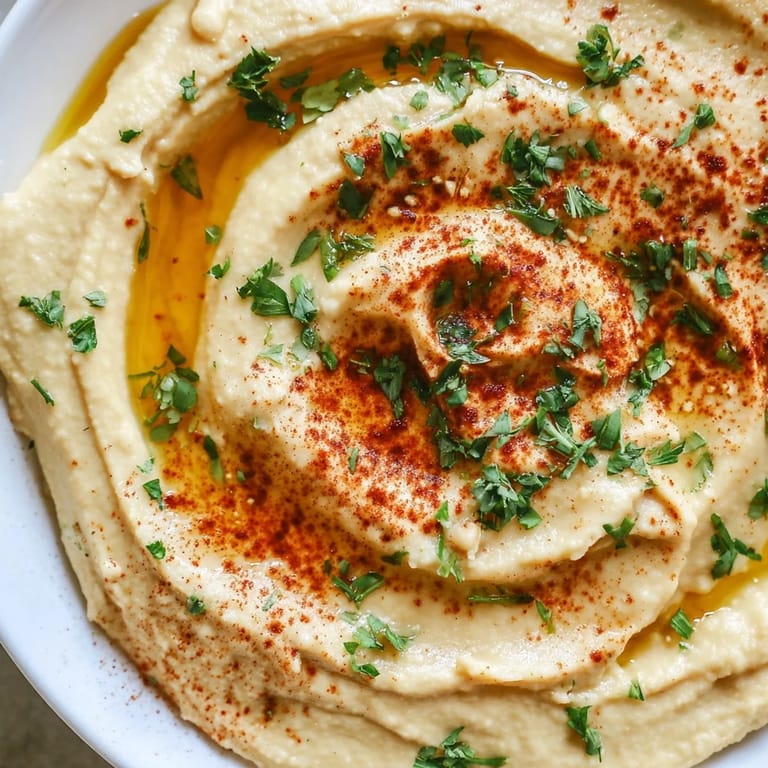
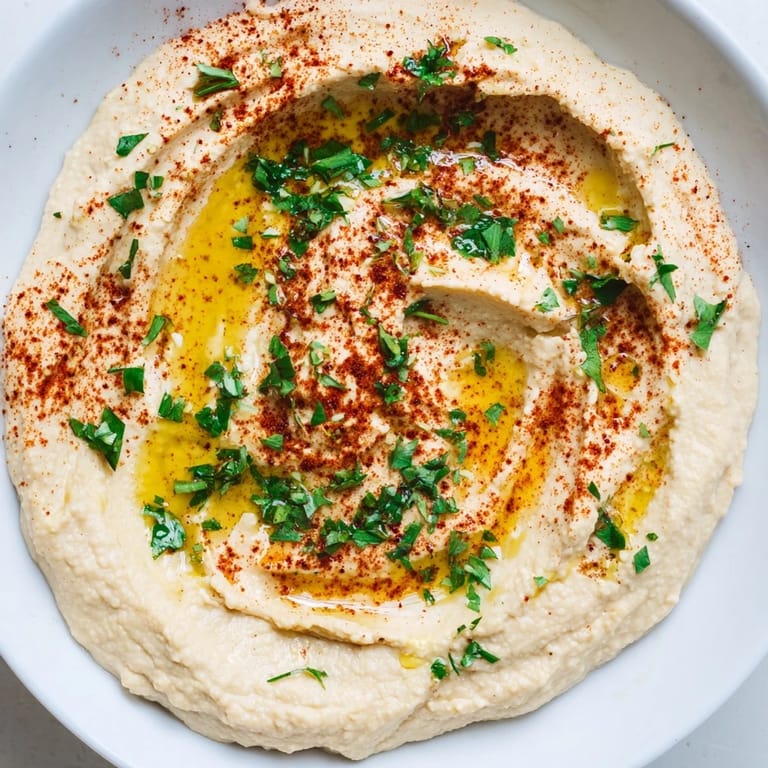
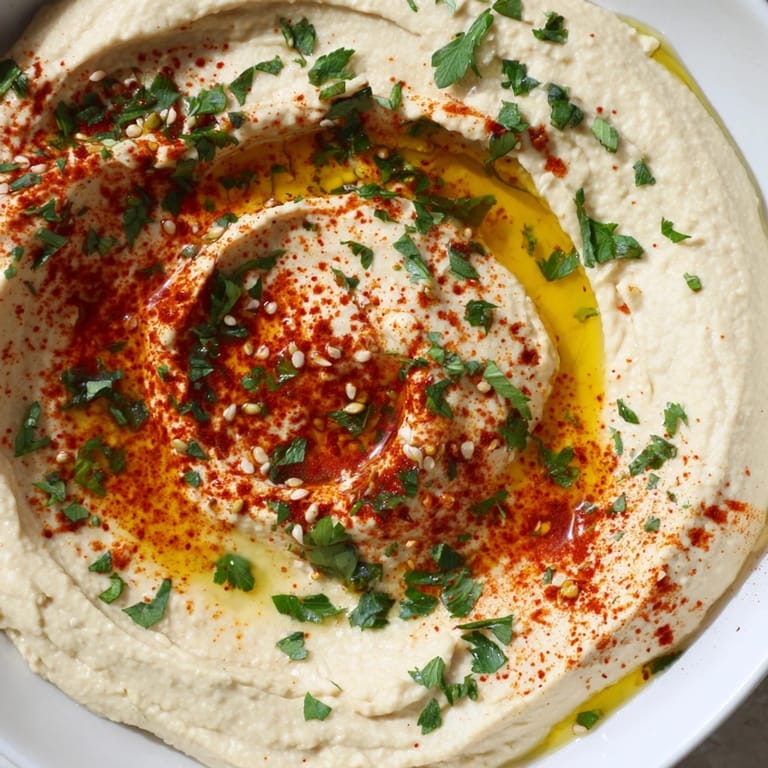
- Transfer the hummus to a shallow serving dish and use the back of a spoon to swirl it gently, creating small wells and ridges that catch the olive oil.
- Finish with intention:
- Drizzle olive oil generously across the top, letting it pool slightly in your swirls. Sprinkle paprika or sumac for color and a whisper of flavor, then scatter parsley over everything.
- Serve immediately:
- Bring it to the table with warm pita, fresh vegetables, or as part of a mezze platter while the hummus is still at its silkiest.
 Merken
 There's a moment when you're spreading hummus on warm pita bread, still steaming from the kitchen, and you realize this dish exists in that quiet space between comfort and elegance. It asks for nothing complicated yet feels like a gift every time.
The Magic of Tahini
Tahini is where most hummus recipes succeed or fail, and it took me several batches to understand why. A thin, runny tahini will never create that cloud-like creaminess; a thick, dense one will make your hummus pasty. The middle ground—a tahini that flows when you spoon it but holds some body—is what you're hunting for. When you find a brand that works for your taste and texture, buy extra and keep it close.
Building Layers of Flavor
Lemon juice and garlic are the architects of flavor in hummus, but they need balance. Too much lemon and your hummus becomes harsh; too little and it tastes dull and heavy. Garlic should whisper, not shout. I learned this the hard way, after making a batch so garlicky that no amount of lemon could save it. Now I mince one small clove and taste as I go, knowing I can always add more but I can never take it back.
Serving and Storage Wisdom
Hummus is most beautiful when it's been sitting at room temperature for 20 minutes, which allows the flavors to open up and the texture to soften slightly. If you're making it ahead, keep it covered in the refrigerator and bring it out before serving. The swirl of olive oil and garnish should happen just before it hits the table—hummus that's been dressed too long loses some of its visual charm.
- Hummus keeps beautifully in an airtight container for up to 4 days, and the flavors actually deepen slightly as it sits.
- If you want heat, a pinch of cayenne mixed into the hummus or sprinkled on top transforms the whole dish in the best way.
- Serve it with whatever you have on hand: warm bread, raw vegetables, roasted eggplant, or olives all find their way to hummus naturally.
 Merken
 Every time someone tries your homemade hummus and their eyes widen just slightly, you'll know why this dish has traveled across centuries and borders. It's simple, honest, and deeply satisfying.
Antworten auf Rezeptfragen
- → Wie erhalte ich eine besonders glatte Konsistenz?
Für extra glatten Hummus können die Kichererbsen vor dem Pürieren geschält werden. Zudem hilft das Hinzufügen von kaltem Wasser beim Erreichen der gewünschten Textur.
- → Welche Gewürze passen besonders gut zu diesem Gericht?
Kreuzkümmel und eine Prise Meersalz sind klassisch. Für eine leicht würzige Note kann etwas Cayennepfeffer hinzugefügt werden.
- → Wie sollte das Gericht serviert werden?
Am besten mit nativem Olivenöl beträufelt und mit Paprika oder Sumach bestreut. Frische Petersilie sorgt für Farbe und Frische. Passt perfekt zu Pita oder frischem Gemüse.
- → Kann ich vorbereiteten Hummus aufbewahren?
Ja, in einem luftdichten Behälter im Kühlschrank hält er sich bis zu vier Tage frisch. Vor dem Servieren kurz umrühren und ggf. mit Olivenöl beträufeln.
- → Ist das Gericht für spezielle Ernährungsweisen geeignet?
Ja, es ist vegan sowie glutenfrei und enthält nur natürliche Zutaten. Wichtig ist die Überprüfung von Tahini und Kichererbsen bei Allergien gegen Sesam.