 Merken
 One autumn afternoon, my neighbor stopped by with a bag of carrots so vibrant they seemed almost unreal, and I found myself standing in the kitchen wondering what to do with them beyond the usual roast. That's when it hit me—what if I combined them with the oranges sitting in my fruit bowl and that knob of ginger I'd been meaning to use? The result was this soup, which turned out to be less about following a recipe and more about letting the kitchen smell guide me. Now it's become my go-to when I want something that feels both comforting and a little bit special, without the fuss.
I made this for my book club last winter, and something unexpected happened—everyone went quiet for a moment after that first spoonful, and then someone said, 'This tastes like sunshine.' That comment stuck with me because it perfectly captures what this soup does. The ginger gives it warmth, the orange juice adds brightness, and somehow it all comes together to feel like a bowl of comfort that also makes you feel lighter.
Ingredients
- Olive oil: Just a tablespoon is enough to soften the onion without making the soup feel heavy—start here and let the aromatics build your flavor foundation.
- Onion and garlic: These are your aromatic backbone; don't skip the mincing because small pieces distribute their flavor more evenly as everything simmers.
- Carrots: Six hundred grams might seem like a lot, but they're the star here—they'll sweeten and soften beautifully, and the color is naturally stunning.
- Fresh ginger: Two tablespoons grated gives that subtle zing without overpowering; if you only have powdered ginger, use half a teaspoon instead.
- Vegetable broth: Use something with good flavor since it's one of your main liquids; homemade is wonderful if you have it, but a quality store-bought version works perfectly fine.
- Coconut milk: This is what makes the soup silky and luxurious, so don't substitute with light coconut milk if you can help it—the richness is part of the magic.
- Orange juice: Fresh squeezed truly makes a difference here; bottled juice works but lacks that bright, living quality that makes this soup feel special.
- Coriander and cumin: These warm spices tie everything together—they're subtle enough not to fight the citrus but present enough to add depth.
- Salt and pepper: Taste as you go; seasoning is personal and depends on your broth, so you're the final judge.
Tired of Takeout? 🥡
Get 10 meals you can make faster than delivery arrives. Seriously.
One email. No spam. Unsubscribe anytime.
Instructions
- Start your aromatics:
- Heat the olive oil in a large pot over medium heat, then add your chopped onion. You'll notice it'll start to soften and become translucent in about 3-4 minutes—listen for a gentle sizzle, not a violent fry.
- Layer in the warmth:
- Stir in the garlic and ginger and let them sit for just a minute; this unlocks their flavor without letting them burn. The smell at this moment should make you take a deep breath.
- Add your vegetables:
- Toss in the sliced carrots along with the coriander and cumin, stirring for a couple of minutes so every carrot piece gets coated in those warm spices. A pinch of salt now helps draw out the carrots' natural moisture.
- Simmer until tender:
- Pour in your vegetable broth and bring everything to a boil, then lower the heat and let it simmer uncovered for about 20 minutes. The carrots will go from firm to completely fork-tender, which is exactly what you want.
- Finish with brightness:
- Remove from heat and stir in the orange juice and coconut milk—don't rush this step because you want to feel the texture change as the coconut milk swirls in. Taste it at this point before blending; you might already be in love.
- Blend to smoothness:
- Using an immersion blender, puree everything until it reaches a silky, uniform consistency. If you're using a standard blender, work in batches and be careful with the hot liquid—never fill it more than halfway.
- Gentle reheat:
- Return the soup to the pot if you used a blender, then warm it gently over low heat while stirring occasionally. This is not about getting it boiling again; it's about bringing it back to a gentle warmth.
- Serve with intention:
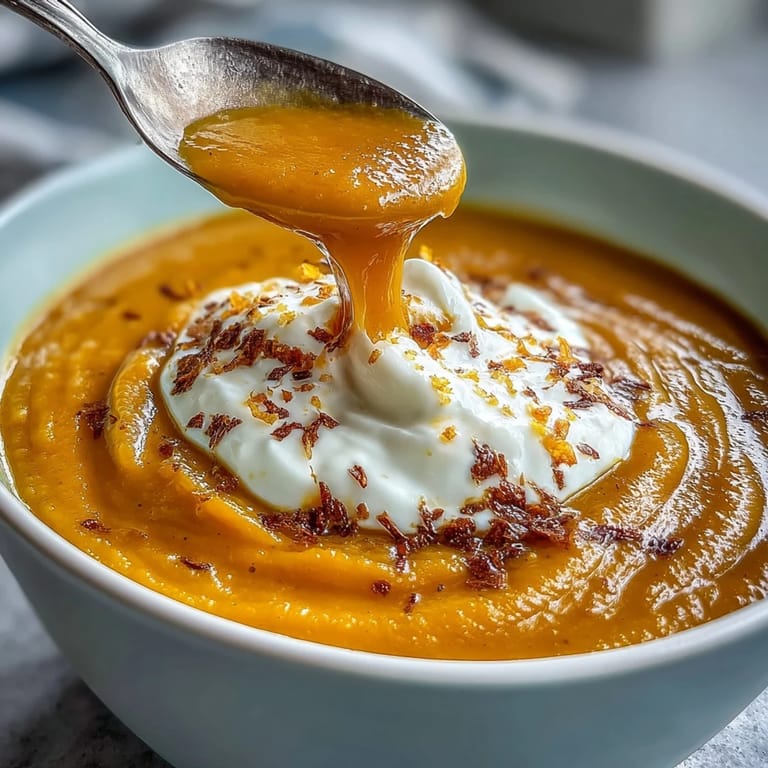
- Ladle into bowls and drizzle with a little extra coconut milk in a spiral or swoosh—even this small gesture makes it feel restaurant-quality. Finish with fresh coriander leaves and a scatter of orange zest if you have it.
 Merken
 What makes this soup special to me isn't just the taste—it's that it proved something I'd been thinking for years: you don't need cream to make something feel luxurious. That realization happened somewhere between the first sip and the second bowl, and suddenly I was thinking about all the other possibilities.
Why Fresh Ginger Matters Here
I learned the hard way that powdered ginger, while convenient, gives this soup a slightly stale quality—it tastes more like an old spice cabinet than like fresh, living ginger. Fresh ginger brings a peppery bite and an almost grassy note that plays beautifully against the sweetness of the carrots and citrus. If you must use powdered, use sparingly and know that your soup will taste good but different. The texture of fresh ginger also breaks down during cooking and becomes almost imperceptible, which means you get the flavor without any fibrous bits.
The Magic of Coconut Milk in This Context
There's something about how coconut milk rounds out the bright sharpness of orange juice and the earthiness of carrots—it creates a kind of flavor bridge that makes everything feel complete. I once tried making this with heavy cream because I'd run out of coconut milk, and while it was creamy and delicious, it felt heavy and one-note. The coconut milk brings its own subtle sweetness and texture, almost like it was made to be here. It also makes the soup vegan and dairy-free, which means almost everyone can enjoy it.
Serving Suggestions and Storage
This soup is wonderful served hot as a first course, but it's equally lovely chilled on a warm day—just thin it slightly with extra broth or coconut milk if you do. It stores beautifully in the fridge for up to four days, and the flavors actually meld and deepen as it sits. You can also freeze it in portions, though I've found it tastes best when eaten within a month or so.
- Serve it with crusty bread for scooping, or offer a grilled cheese sandwich on the side for something more substantial.
- For a spicy kick, add a pinch of chili flakes when you add the other spices, or serve with a small drizzle of chili oil on top.
- Fresh coriander leaves and orange zest are optional but genuinely transform the soup from simple to restaurant-quality, so grab them if you can.
 Merken
 This soup has become my answer to so many moments—when I need comfort that doesn't feel heavy, when I'm cooking for someone with restrictions, when I want to feel like I've made something thoughtful without spending hours in the kitchen. Every time I make it, I'm reminded that the best recipes are often the simplest ones.
Antworten auf Rezeptfragen
- → Wie kann man die Suppe noch würziger machen?
Für eine intensivere Schärfe lässt sich eine Prise Chiliflocken zu den Gewürzen hinzugeben.
- → Welche Alternativen zum Orangensaft gibt es?
Limettensaft kann als Ersatz dienen und verleiht der Suppe eine frischere, säuerlichere Note.
- → Wie bekommt die Suppe eine besonders cremige Konsistenz?
Die Suppe wird nach dem Kochen püriert und mit Kokosmilch verfeinert, was ihr die samtige Textur verleiht.
- → Kann man die Suppe im Voraus zubereiten?
Die Suppe lässt sich gut vorkochen und im Kühlschrank aufbewahren. Vor dem Servieren erneut erhitzen und gegebenenfalls mit Kokosmilch verfeinern.
- → Welche Beilage passt gut zur Suppe?
Knuspriges Brot oder asiatisch inspirierte Beilagen ergänzen die aromatische Suppe ideal.