 Merken
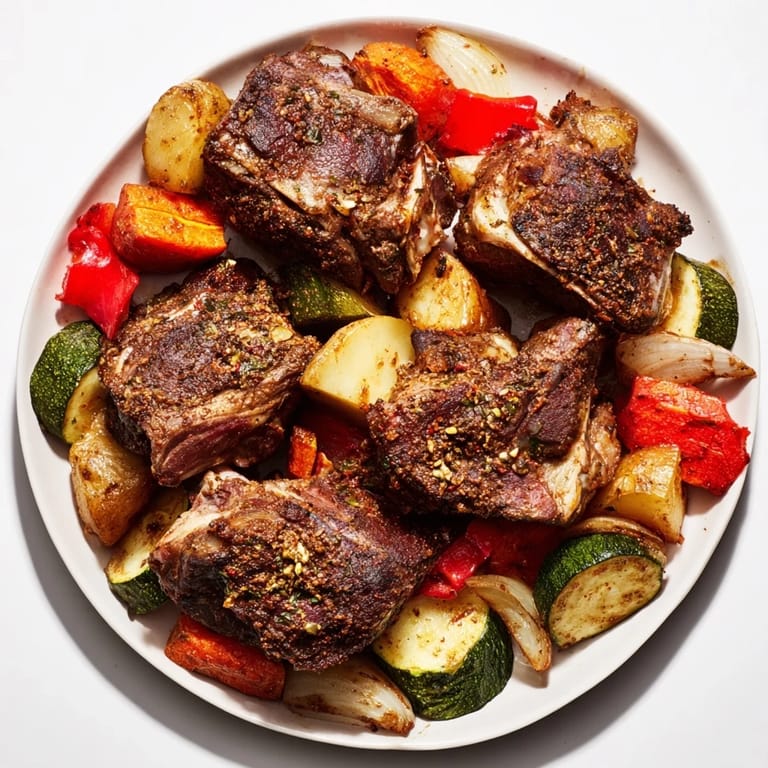
 The first time I tasted zarb, I wasn't expecting the smoke to follow me home in my clothes and hair, clinging like a memory of something ancient and sacred. My cousin's husband had dug a pit in his backyard near Amman, and as he lifted the foil-wrapped package from beneath the hot coals and sand, the steam rose up carrying scents I'd only imagined: cumin meeting cinnamon, meat so tender it surrendered to the gentlest touch. That afternoon taught me that some dishes belong to the earth as much as to the kitchen, and that patience rewarded becomes flavor.
Years later, I made this in my own kitchen for friends who'd never experienced Middle Eastern cooking beyond a restaurant. Watching their faces when I lifted that foil, seeing the steam carry the spice-laden aroma around the room, I realized zarb isn't just food—it's a small ceremony, a way of saying you've honored both the ingredients and the people eating them.
Ingredients
- Lamb shoulder or chicken pieces, bone-in, cut into large chunks (1.5 kg): Bone-in pieces stay moist and develop deeper flavor; boneless meat tends to dry out during the long cooking.
- Olive oil (2 tbsp): Use good quality oil here since it becomes the base of your marinade and carries all the spice into the meat.
- Ground cumin (2 tsp): The heart of the flavor profile; it opens up as the dish cooks and becomes almost sweet.
- Ground coriander (2 tsp): Adds brightness and a subtle citrus note that balances the heavier spices.
- Ground cinnamon (1 tsp): A pinch of warmth and complexity; don't skip it, even though it sounds unusual.
- Smoked paprika (1 tsp): Brings that essential smoky character since we're mimicking the underground oven effect.
- Ground black pepper (1 tsp): Freshly ground makes all the difference in both intensity and flavor.
- Salt (2 tsp): Season generously; the long cooking time won't soften harsh salt, it deepens it.
- Minced garlic (4 cloves): The marinade's best friend, it mellows and becomes almost sweet during cooking.
- Lemon juice (juice of 1 lemon): The acid tenderizes and brightens; don't use bottled, fresh is worth the squeeze.
- Large potatoes, peeled and quartered (3): These catch all the drippings and become the best part of the dish.
- Large carrots, peeled and chopped into large pieces (3): They stay firm and sweet, not mushy, because of the tightly sealed environment.
- Medium onions, quartered (2): They practically melt into a savory glaze.
- Medium zucchinis, sliced into thick rounds (2): The thick pieces matter; thin slices disappear.
- Red and green bell peppers, seeded and chunked (1 each): Add color and a subtle sweetness that plays against the spices.
- Medium tomatoes, quartered (2): They break down slightly and add acidity to balance the richness.
- Long-grain rice, rinsed (2 cups): Rinsing removes excess starch so each grain stays separate and fluffy.
- Chicken or vegetable broth (3 cups): Use homemade if you can; it makes a noticeable difference.
- Butter or olive oil (1 tbsp): Just enough richness to carry the flavors through the rice.
Tired of Takeout? 🥡
Get 10 meals you can make faster than delivery arrives. Seriously.
One email. No spam. Unsubscribe anytime.
Instructions
- Build the marinade base:
- In a large bowl, whisk together the olive oil, cumin, coriander, cinnamon, smoked paprika, black pepper, and salt until they start to clump slightly. Add the minced garlic and lemon juice, which will help loosen everything into a paste. This should smell like a spice market at dawn.
- Massage the meat:
- Add your meat pieces to the marinade and really work it in with your hands, getting the spice mixture into every crevice and under any skin. Don't be shy; the more you massage, the deeper the flavor penetrates. Cover and refrigerate for at least one hour, though overnight is when the real magic happens.
- Prepare the vegetables:
- Cut everything into large, chunky pieces—these should feel substantial in your hand, not delicate. Toss them in a separate bowl with a little olive oil, salt, and pepper, letting them get acquainted.
- Build your tray:
- If you're using a regular oven, preheat it to 180°C (350°F). Arrange the marinated meat on a wire rack or the center of a large roasting tray, then scatter your vegetables around and underneath. The vegetables on the bottom will catch all the precious drippings; the ones nestled around the meat will get kissed by the heat.
- Seal in the steam:
- Cover the entire tray tightly with aluminum foil, making sure there are no gaps where steam can escape. If you want to feel traditional, wrap the whole thing in banana leaves first, then foil. This sealed environment is what transforms the oven into an underground zarb pit.
- Let time do the work:
- Bake for 2.5 hours without peeking—and I mean it, don't peek. The sealed steam is doing something sacred in there. You'll know it's ready when the meat practically falls from the bone and the vegetables have surrendered completely to tenderness.
- Prepare the rice (if serving):
- In a saucepan, combine rinsed rice, broth, butter or oil, and salt. Bring to a boil, then cover and reduce heat to the lowest setting. Let it simmer quietly for 15-20 minutes until the liquid is absorbed and each grain is fluffy.
- The grand unveiling:
- Carefully open the foil away from your face—the steam will rush up with all the accumulated flavor and heat. Transfer the meat and vegetables to a large platter, optionally over a bed of rice, and spoon all those precious pan juices over everything.
 Merken
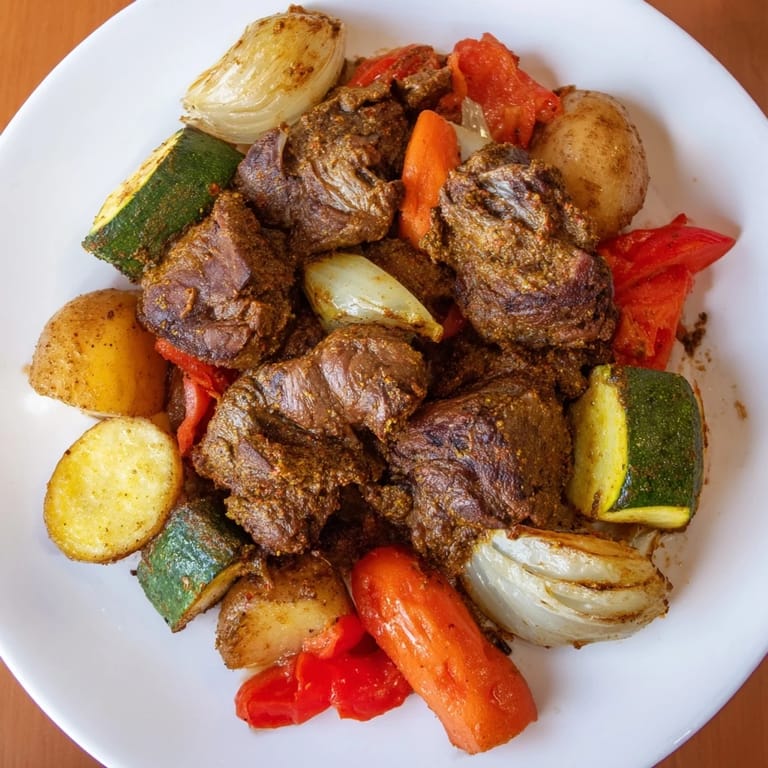
 There's a moment when you first open that foil and the steam rises up to meet you, carrying with it the essence of hours of slow cooking—that's when zarb stops being a recipe and becomes an experience, a connection to something timeless and communal. It's the kind of dish that makes people pause mid-conversation to appreciate what they're eating.
Marinating: The Foundation of Flavor
I learned the hard way that rushing the marinade costs you in the final dish. The first time I made zarb with only a thirty-minute marinade, the spices stayed mostly on the surface, and the meat tasted good but not transcendent. Now I insist on overnight marinating whenever possible. The lemon juice's acidity slowly penetrates the meat fibers, the garlic becomes mellow and sweet, and those spices have time to create a flavor base that runs all the way through. If you're short on time, even four hours makes a noticeable difference, but overnight transforms it.
Vegetables: More Than Just Sides
Don't think of these vegetables as supporting players. In zarb, they absorb the rendered fat from the meat, the spice dust, and the concentrated cooking liquid that nowhere else in the meal can reach. The potatoes that sit directly under the meat become almost creamy inside, with crispy edges where they touch the tray. The carrots stay firm enough to maintain their identity but soft enough that they taste almost buttery. The onions practically dissolve into a sweet glaze. This is why size matters—small pieces steam into mush, but large chunks maintain structure and develop character.
Serving and Sharing
Zarb deserves to be served on a big platter, piled high so people can see the abundance. Drizzle those pan juices generously over everything, and if you've made rice, pile it underneath so it soaks up every last bit of flavor. Serve alongside cool yogurt to cut through the richness, warm flatbread to scoop up the juices, and if you want to be traditional, mint tea to sip between bites.
- Make sure to scrape up any caramelized bits stuck to the bottom of the tray—that's liquid gold in the form of pan sauce.
- Leftovers taste even better the next day; the flavors deepen and meld overnight.
- You can make this a day ahead, refrigerate it covered, and gently reheat it wrapped in foil at 160°C for about 30 minutes.
 Merken
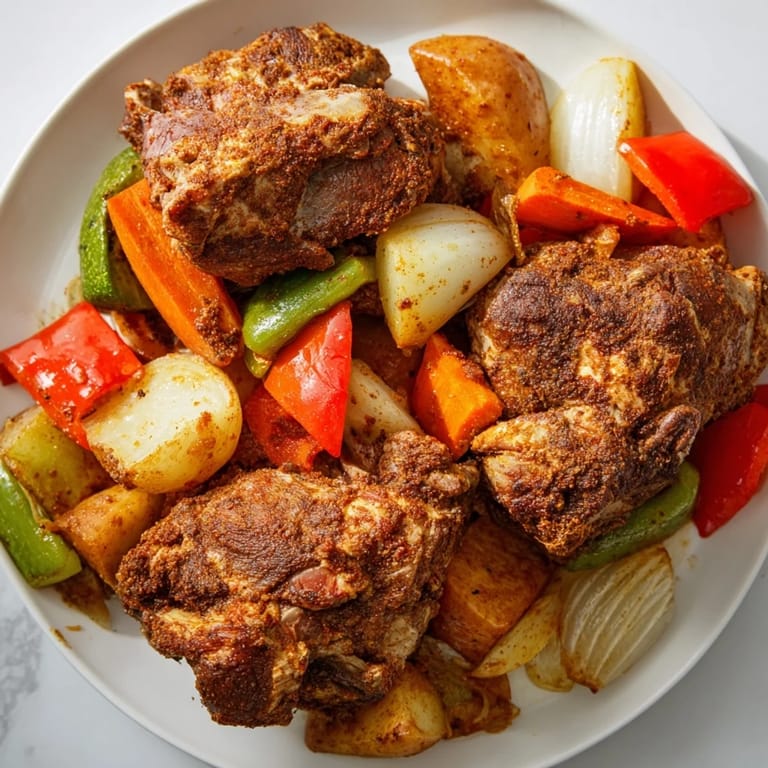
 Zarb is one of those rare recipes where patience and technique merge into something greater than the sum of its parts. Make it once, and you'll understand why families gather around it.
Antworten auf Rezeptfragen
- → Was macht den Zarb besonders lecker?
Das langsame Garen im Erdofen sorgt für eine zarte Textur und tiefes Aroma, kombiniert mit einer intensiven Marinade aus Gewürzen.
- → Welches Fleisch eignet sich am besten?
Am häufigsten wird Lamm oder Hähnchen verwendet, da beide beim langen Garen besonders saftig bleiben.
- → Kann man das Gericht mit anderem Gemüse variieren?
Ja, Auberginen und Süßkartoffeln sind beliebte Ergänzungen, die gut mit den Gewürzen harmonieren.
- → Wie lange sollte die Marinade einziehen?
Mindestens eine Stunde, idealerweise über Nacht, damit sich die Gewürze gut entfalten können.
- → Ist es möglich, den Zarb im normalen Backofen zuzubereiten?
Ja, ein großer Bräter mit fest verschlossenem Deckel simuliert gut die Feuchtigkeit und Hitze des Erdofens.