 Merken
 There's something about summer afternoons that makes you crave something fresh and uncomplicated. I discovered this white bean salad while standing in a Mediterranean market, watching vendors arrange tomatoes by color, and realized I wanted to recreate that simplicity at home. The first time I made it, I had no fancy ingredients on hand—just what was in my pantry and a handful of herbs from the windowsill—and somehow it turned out better than I expected. It became the kind of recipe I return to when life gets hectic, needing something that feels nourishing without demanding much from me.
I remember bringing this to a dinner party, nervously setting it down next to everyone else's elaborate dishes, only to watch it disappear first. A guest asked for the recipe, and when I listed the ingredients, she seemed almost disappointed by how simple it was—until she tasted it and understood. That's when I knew this wasn't fancy food, but it was honest food, and there's something powerful in that.
Ingredients
- Cannellini beans (2 cups, drained and rinsed): These creamy white beans are the foundation; draining and rinsing them removes excess sodium and prevents the salad from becoming starchy.
- Cherry tomatoes (1 cup, halved): Use the ripest ones you can find—they carry all the brightness this dish needs, and halving them rather than chunking them keeps the texture tender.
- Red onion (1 small, finely diced): The sharpness mellows as the salad sits, which is why it gets better with time; don't skip the small dice, as it distributes flavor evenly.
- Garlic (1 clove, minced): Raw garlic adds a whisper of pungency that balances the sweetness of tomatoes and oil.
- Cucumber (1 small, diced, optional): If you add it, include it just before serving so it stays crisp and doesn't turn the salad watery.
- Fresh parsley (1/4 cup, chopped): This is your green anchor, bright and mild enough not to overpower the other herbs.
- Fresh basil (2 tbsp, chopped): Add it just before serving or right at the end, as heat and time can make basil turn dark and lose its liveliness.
- Fresh oregano (1 tbsp fresh or 1 tsp dried): Oregano is the Mediterranean note that makes this salad feel purposeful and intentional.
- Extra-virgin olive oil (3 tbsp): This is where quality matters—use oil you actually enjoy drinking, because it becomes the voice of the entire dish.
- Red wine vinegar or lemon juice (1 tbsp): Vinegar deepens the flavors, while lemon keeps things brighter; choose based on your mood.
- Sea salt and black pepper (1/2 tsp salt, 1/4 tsp pepper): Taste as you go, because different oils and tomatoes carry different salt levels.
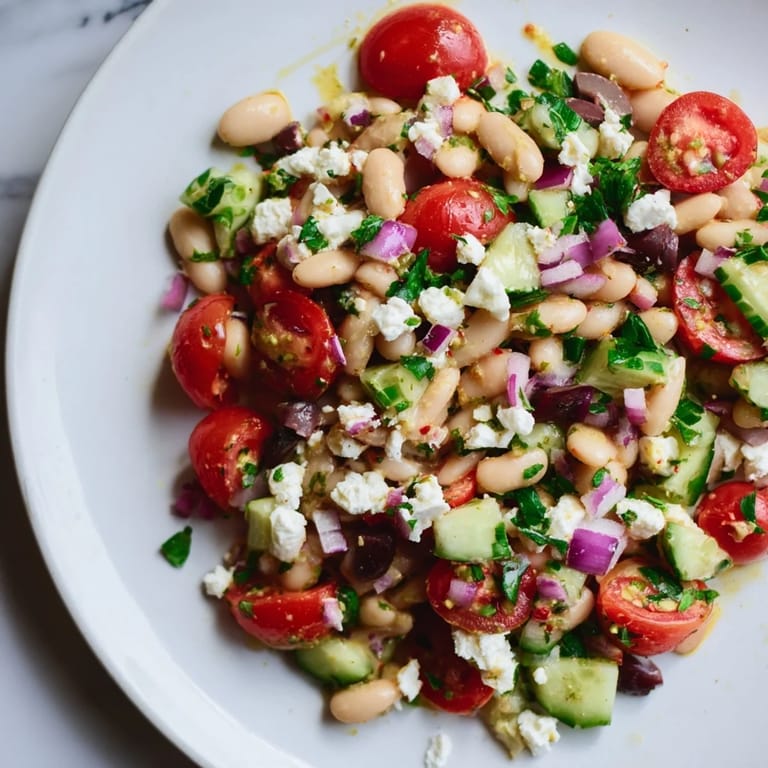
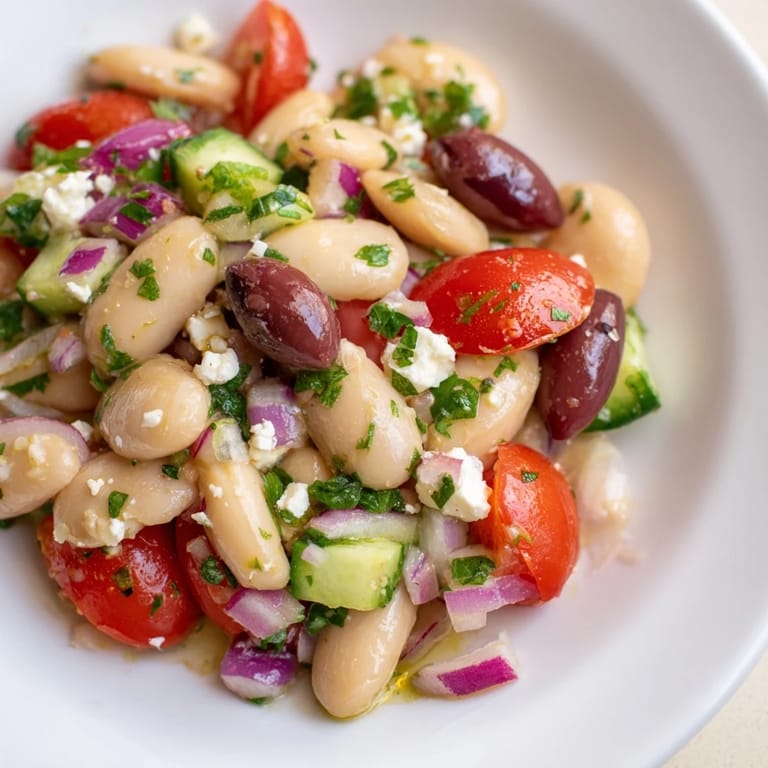
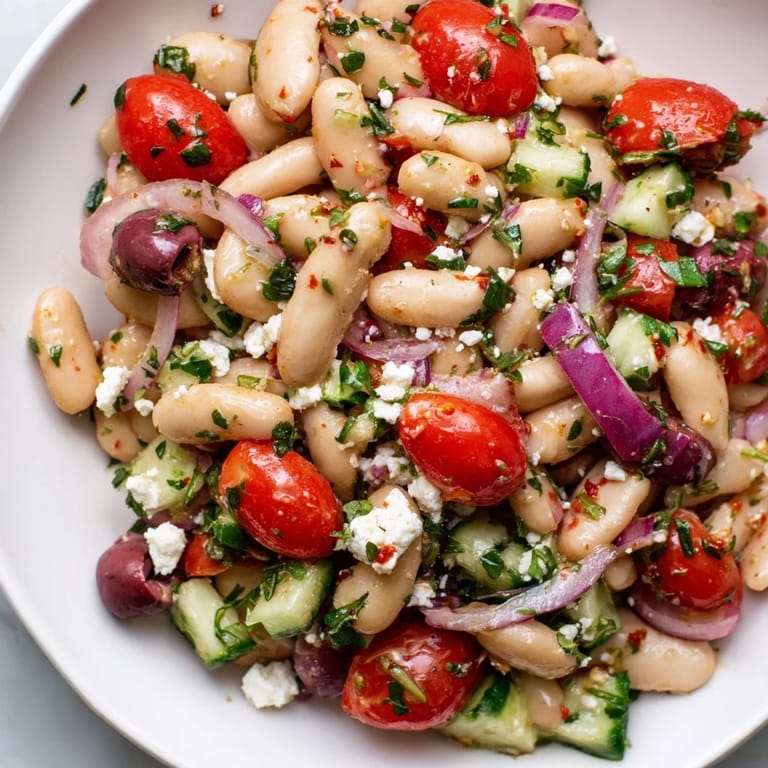
- Kalamata olives and feta cheese (optional): Olives add a briny richness and feta brings a creamy tang that transforms the salad into something more substantial.
Tired of Takeout? 🥡
Get 10 meals you can make faster than delivery arrives. Seriously.
One email. No spam. Unsubscribe anytime.
Instructions
- Gather your vegetables:
- Rinse the beans and pat them dry if they feel slimy—this small step prevents the salad from being watery. Halve your tomatoes and dice your onion fine enough that it feels like it dissolves on your tongue.
- Combine the base:
- Toss beans, tomatoes, onion, and garlic in a large bowl, letting them get to know each other. If using cucumber, set it aside for now so it stays crisp.
- Add the green parts:
- Scatter parsley and oregano throughout, mixing gently. Hold the basil back for now—it's too delicate to toss early.
- Make the dressing:
- Whisk oil and vinegar in a small bowl until they emulsify into something creamy and cohesive, then season it generously. A small whisk makes this easier, but a fork works just fine.
- Bring it together:
- Pour the dressing over everything and toss with a gentle hand, so the beans stay whole and don't become a mush. Taste now and adjust salt and pepper—this is your moment to make it yours.
- Finish and rest:
- Fold in olives and feta if using, then add your reserved basil and cucumber right before serving. Let it sit for at least 30 minutes if you have time; the flavors will become rounder and more generous.
 Merken
 There was a moment, eating this salad with friends on a balcony overlooking hills, when someone said it tasted expensive and complicated, and I realized how powerful simplicity is. That's when food stops being about technique and becomes about the feeling of being taken care of.
Why This Salad Stays in Rotation
This recipe doesn't ask you to be perfect or fancy—it just asks you to use good ingredients and let them speak. I've made it in studio apartments with minimal tools and in kitchens with everything, and it always tastes like intention. It's the kind of dish that makes you feel resourceful, even when all you've done is combine things that were already good on their own.
The Secret to Flavor Development
Time is the ingredient you can't buy, and this salad rewards patience like almost nothing else I cook. When you make it ahead, the onion loses its harsh edge, the beans absorb the vinegar and oil, and the tomato juice mingles with everything else to create a sauce that tastes intentional. I've learned to embrace the idea of planning ahead—not because it's efficient, but because the result is noticeably better, and that small difference is worth the forethought.
Variations That Keep It Interesting
I've learned to treat this as a template rather than a rule, swapping beans based on what's in the pantry or what I'm craving. Sometimes I use great northern beans, which feel lighter, or add chickpeas for extra protein when I'm serving it as a main course instead of a side. The dressing is flexible too—I've used lemon juice instead of vinegar when I wanted brightness, or added a touch of honey when the vinegar felt too sharp.
- Try stirring in grains like farro or quinoa to transform it from a side dish into a full meal that actually keeps you satisfied.
- Add handfuls of arugula or spinach just before serving for extra greens and a peppery note that plays beautifully with the beans.
- If you're feeding someone who loves richness, crumbled feta and olives elevate this from light lunch to something that feels almost indulgent.
 Merken
 This salad became the dish I make when I want to feed people without stress, when I want something that tastes like summer, or when I need to remind myself that sometimes the best meals are the simplest ones. It's the kind of recipe that never gets old.
Antworten auf Rezeptfragen
- → Welche Bohnen eignen sich am besten?
Am besten eignen sich Cannellini-Bohnen, da sie eine cremige Textur und milden Geschmack bieten. Alternativ gehen auch Great Northern oder Navy-Bohnen.
- → Wie lange sollte der Salat ziehen?
Mindestens 30 Minuten im Kühlschrank sorgen für intensiveren Geschmack. Für noch mehr Aroma kann er bis zu ein paar Stunden marinieren.
- → Kann ich Feta weglassen?
Ja, Feta ist optional. Für vegane Varianten lässt man ihn einfach weg oder ersetzt ihn durch eine pflanzliche Alternative.
- → Welche Kräuter passen besonders gut?
Frisches Basilikum, Petersilie und Oregano harmonieren wunderbar und bringen mediterranen Geschmack in den Salat.
- → Wie bewahre ich den Salat auf?
Im Kühlschrank in einem luftdichten Behälter ist der Salat bis zu zwei Tage frisch und geschmackvoll.